Days
Hours
Minutes
Seconds
Submit your abstract before the deadline to avail early review.
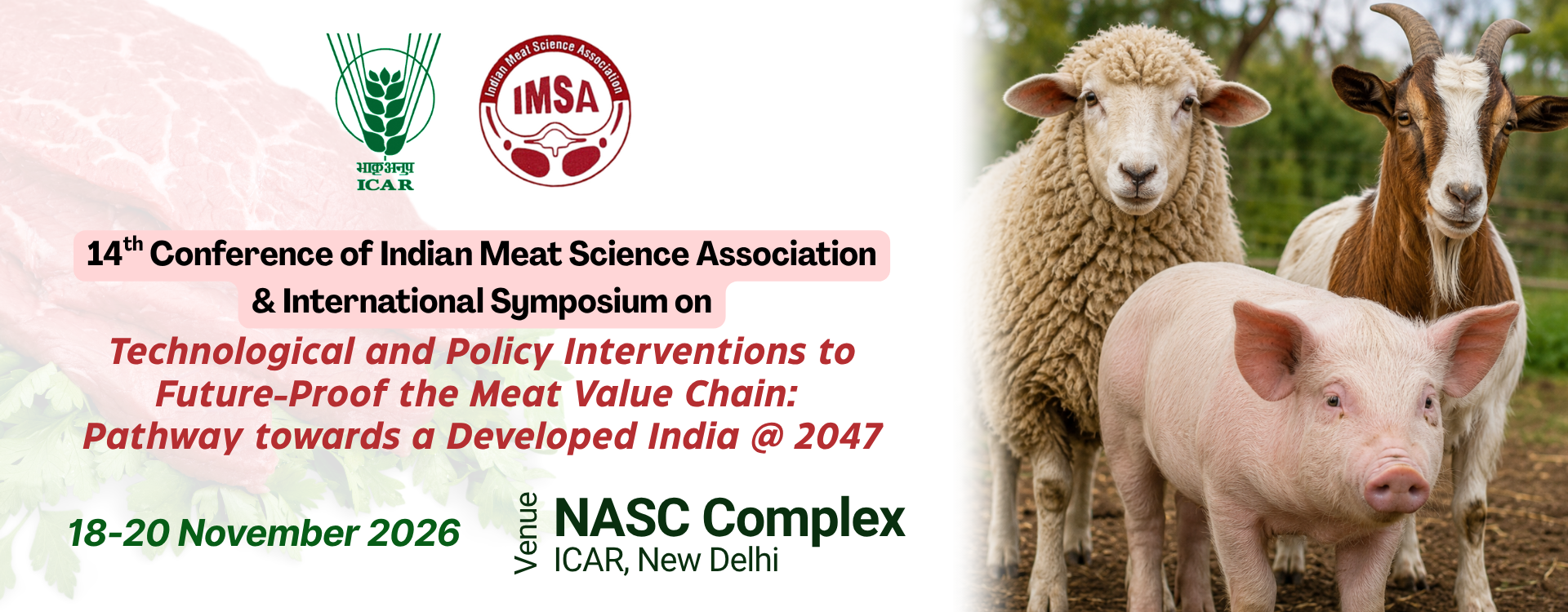
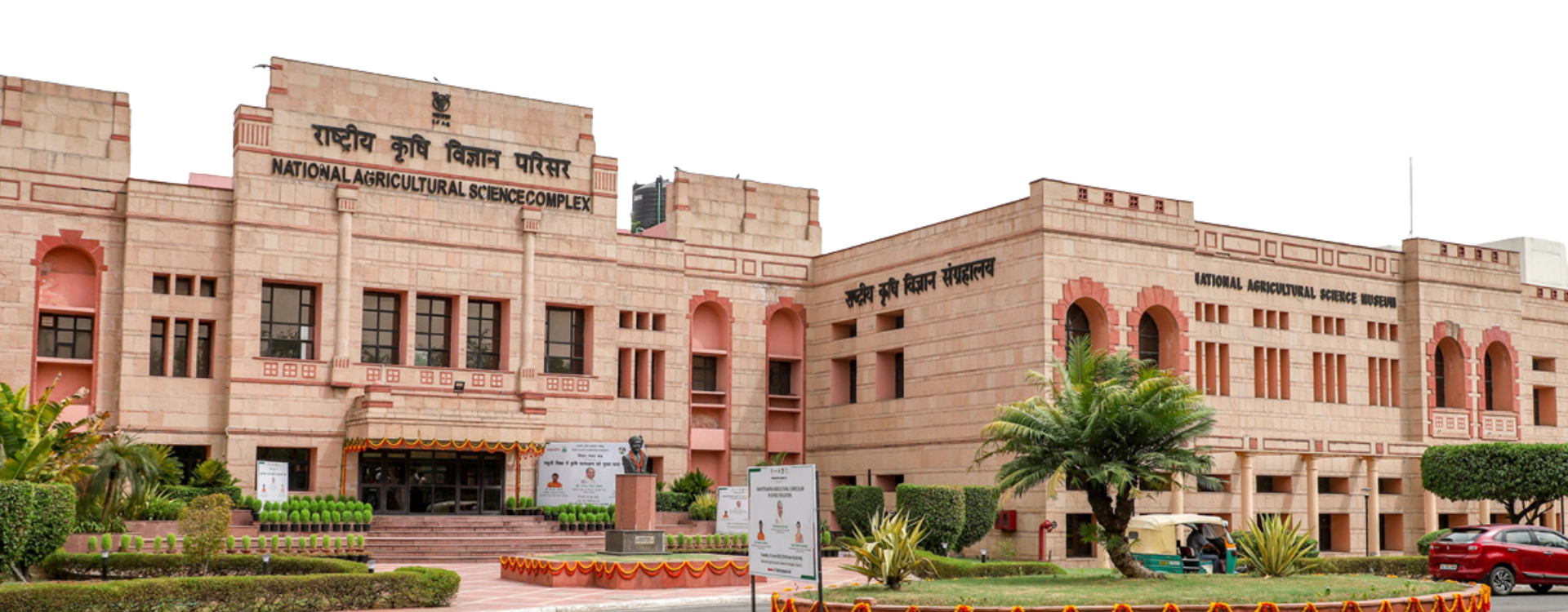
The 14th Conference of the Indian Meat Science Association (IMSACON XIV) and International Symposium on "Technological and Policy Interventions to Future-Proof the Meat Value Chain: Pathway towards a Developed India @ 2047" will be held at the National Agricultural Science Complex (NASC), ICAR, Pusa, New Delhi from November 18–20, 2026. The conference will serve as an international platform for meat scientists, technologists, policymakers, industry stakeholders, research scholars, and students to deliberate on cutting-edge developments in meat production, processing, quality assurance, and marketing and to chart the course for a future-ready Indian meat sector aligned with the Viksit Bharat @ 2047 vision.
Purpose & Objectives of the Symposium
India holds the largest livestock population in the world. In 2024–25, the country produced 10.50 MT of meat. By 2047–48, meat demand is estimated at 21 MT under the Business-as-Usual (BAU) scenario and between 21–25 MT under the High-Growth (HIG) scenario (NITI Aayog, 2024). Furthermore, when accounting for exports, the production target is set at 30 MT. Given current production levels, the sector must grow 2.5 to 3 times to meet 2047 demands.
Currently, the meat sector is projected to grow at 3.61% and 4.71% per annum under BAU and HIG scenarios, respectively — short of the targeted demand growth of 4.48% and 5.59%. Value addition, presently below 10%, is projected to reach approximately 30% (CII Food Processing Vision 2047). Current exports are valued at ₹39,552 crore (2024-25), with buffalo meat contributing 93% of this value.
The conference seeks to catalyze a strategic roadmap promoting the "Pink Revolution" as a harbinger of nutritional security in Viksit Bharat @ 2047. The event aims to address critical gaps in value addition, hygienic production, traceability-based quality assurance systems, cultured meat technologies, nano-packaging, molecular diagnostics for meat safety, and sustainable meat-water-energy synergy.
Discussions with international experts will help bridge the gap between the global and national scenarios. By providing a comprehensive framework, the conference intends to strengthen the meat value chain, enhance rural employment opportunities, and ensure long-term nutritional security for a Developed India by 2047.
Key Objectives
● Forecast the demand for meat and meat products by 2047 and formulate strategic frameworks to meet future requirements
● Showcase disruptive technologies across the meat value chain—from production to marketing—to modernize India's meat industry
● Facilitate high-level dialogue among scientists, policymakers, research scholars, and industry leaders
● Encourage collaboration between academia, industry, and policymakers to address policy gaps
● Strengthen international collaborations and promote public–private partnerships for innovation
Conference Highlights
● Keynote lectures by internationally renowned meat scientists, experts, and policymakers
● Invited talks by leading national scientists and global experts
● Oral and poster presentations of original research
● Technical sessions on hygienic meat production, processing, cold chain, food safety, and policy
● Farmer–Industry–Scientist–Policymaker interaction for sector-wide solutions
● Technology demonstration and agri-food entrepreneurship showcase
● Dedicated sessions for young scientists, research scholars, and students
● IMSA Awards ceremony and Silver Jubilee special recognition
● Publication of selected papers in the Journal of Meat Science (SCOPUS indexed)
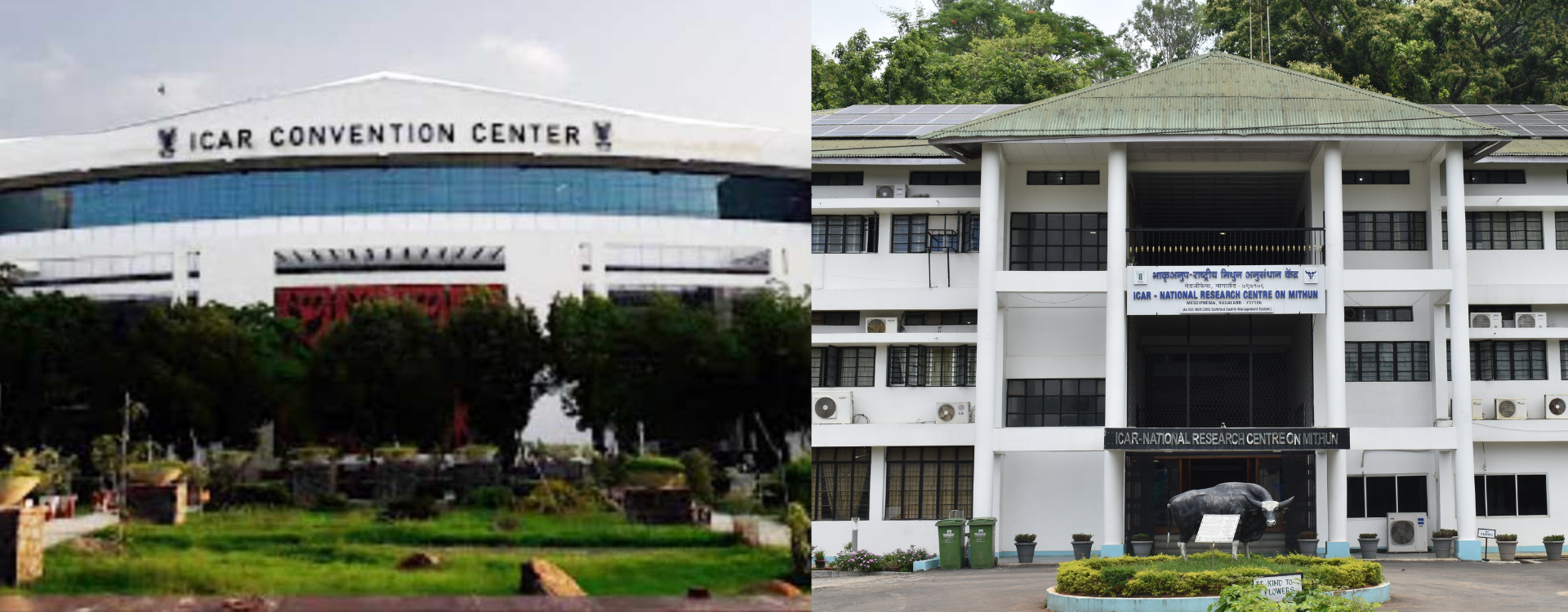
ICAR–National Research Centre on Mithun (ICAR–NRCM), located at Medziphema, Nagaland, is a premier national research institute functioning under the Indian Council of Agricultural Research (ICAR), New Delhi.
The institute is mandated to undertake research, education, and extension activities related to Mithun and allied livestock species. ICAR–NRCM plays a significant role in the conservation, genetic improvement, sustainable production, and scientific management of Mithun, which is an important livestock species of the North Eastern Hill region of India.
Through advanced research programs, technology dissemination, and collaborative initiatives, ICAR–NRCM contributes towards strengthening livestock-based livelihoods, enhancing nutritional security, and promoting sustainable livestock development in the region and across the country.
The Indian Meat Science Association (IMSA), registered in 2001 (Reg. No. 307/2001), is India’s leading professional body dedicated to the advancement of meat science, meat technology, and livestock products research. The Association is headquartered at ICAR–National Meat Research Institute (ICAR–NMRI), Hyderabad.
With nearly 800 Life Members, IMSA serves as a vibrant platform for scientists, academicians, industry professionals, researchers, and students working in the field of meat and livestock products technology. The Association actively promotes research, education, innovation, scientific exchange, and industry collaboration to strengthen the Indian meat sector and enhance sustainable growth opportunities.
Journal of Meat Science (JMS) is the official peer-reviewed and SCOPUS-indexed journal of Indian Meat Science Association (IMSA) and is listed by the publisher.
Become a member of the Indian Meat Science Association (IMSA) and connect with leading meat scientists, technologists, researchers, and industry experts contributing towards the future of India’s meat and livestock sector.
Join Membership Visit IMSA Society WebsiteAccomopanied Persons will not receive the registration kit
The conference will feature an award ceremony recognising outstanding contributions by researchers, academicians, industry professionals and students. Award details, eligibility criteria, application procedures, and deadlines will be announced on the IMSA website (www.imsa.org.in). Award applications can be submitted only through the conference website.
Dr. M. L. Jat
Secretary, DARE & DG, ICAR, New Delhi
Dr. Keshab Barman
Principal Scientist, ICAR, New Delhi
Dr. Rajneesh Rana
Principal Scientist, ICAR, New Delhi
Dr. Kathiravan Periasamy
Principal Scientist, ICAR–NRCM, Nagaland
Dr. Sanjeev Kumar Singh
Senior Scientist & Head, KVK Phek, Nagaland
Dr. Harshit Kumar
Scientist, ICAR–NRCM, Medziphema, Nagaland
Dr. Yathish H. M.
Senior Scientist, ICAR–NRCM, Medziphema, Nagaland
Dr. Narendra V. N.
Scientist, ICAR–NRCM, Medziphema, Nagaland
Dr. Y. M. Somagond
Scientist, ICAR–NRCM, Medziphema, Nagaland
Dr. Jyoti Jawla
Scientist, ICAR, New Delhi
Accommodation options for IMSACON XIV participants
📌 For Conference Participants
• Direct booking only
• Pick-up/drop available from these hotels
• Tariffs include complimentary breakfast
New Delhi, the capital city of India, is one of the country’s most prominent centers for governance, culture, heritage, education, and international diplomacy. The city represents a unique blend of historic grandeur and modern urban development, offering visitors a rich experience of India’s architectural heritage, diverse traditions, and vibrant metropolitan lifestyle.
As the administrative heart of the nation, New Delhi houses several important institutions including the Parliament of India, Rashtrapati Bhavan, Supreme Court, national ministries, embassies, museums, and cultural centres. The city is also widely known for its historical monuments, bustling markets, gardens, cuisine, and world-class infrastructure.
A local sightseeing programme in New Delhi may be arranged for interested delegates and accompanying persons on 21st November 2026, after the conference sessions/valedictory programme, on payment basis.
The tentative sightseeing plan may include selected places of historical, cultural, and national importance such as India Gate, Rashtrapati Bhavan area, Qutub Minar, Humayun's Tomb, Lotus Temple, Akshardham Temple, Dilli Haat, National Museum, and other nearby attractions depending on time availability, traffic conditions, and final logistical arrangements.
Delegates interested in availing the sightseeing facility will be required to register separately through the conference website/help desk. The charges, itinerary, reporting time, mode of transport, and other details will be notified closer to the conference date. The sightseeing programme will be conducted subject to a minimum number of participants.
New Delhi experiences generally pleasant weather during November, making it a suitable time for academic meetings, travel, and local visits. During November 18–20, 2026, the weather is expected to remain mild and comfortable, with cool mornings and evenings and moderately warm afternoons.
Delegates are advised to carry light woollens or a jacket, especially for early morning and evening travel. As air quality in Delhi may vary during this period, participants with respiratory sensitivity may carry personal masks or prescribed medication as a precaution.
Updated weather information and local travel guidance will be shared on the conference website closer to the event dates.
With its rich heritage, excellent connectivity, and modern infrastructure, New Delhi offers an ideal destination for international conferences, academic interactions, tourism, and professional networking.